
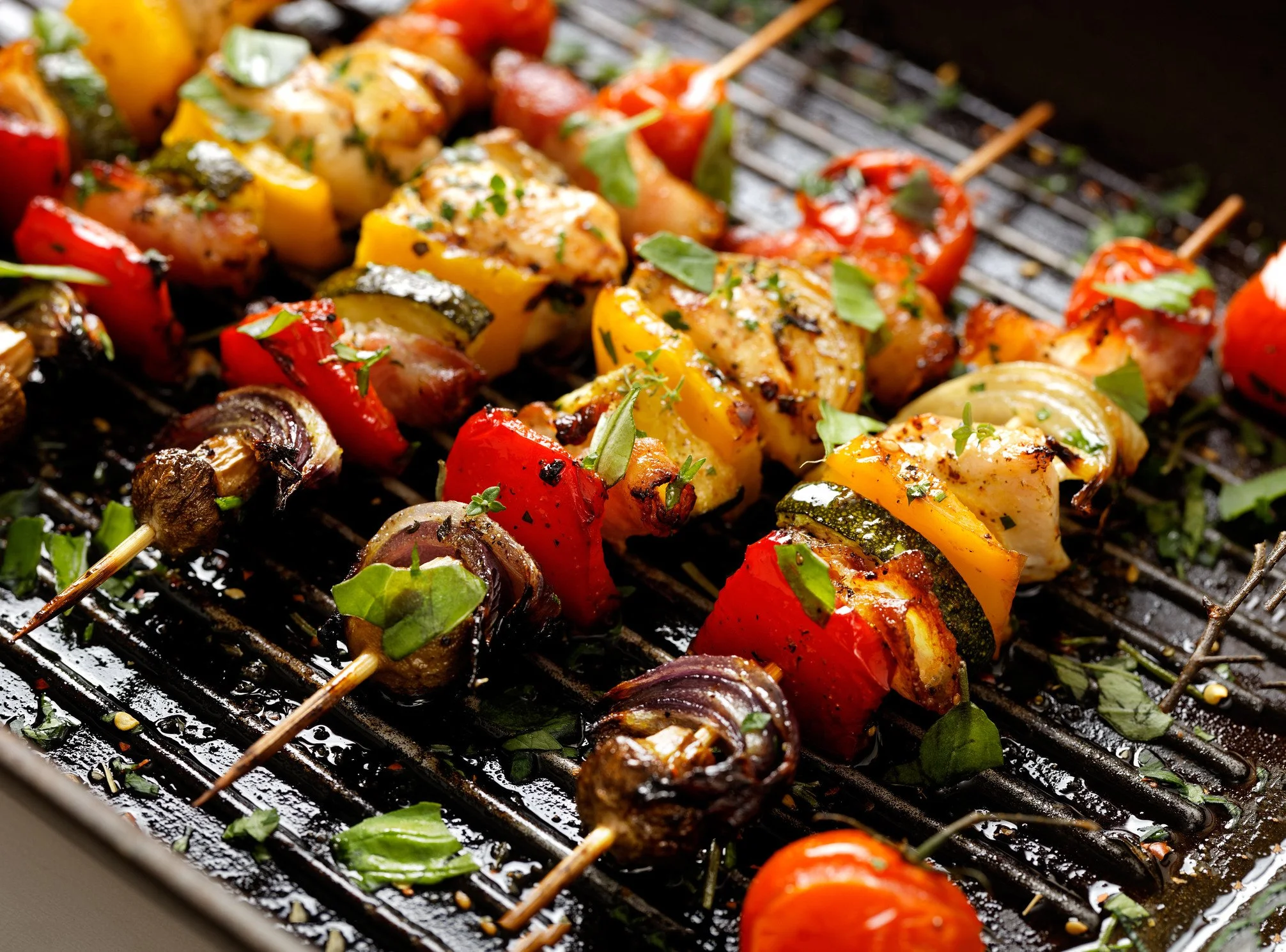
Longer days and warmer weather have arrived — and with them, the summer BBQ. But open flames carry hidden risks. Here's what the latest science says about grilling safely, and how to protect yourself at every cookout.
The two main culprits: HCAs and PAHs
When muscle meat — beef, pork, chicken, or fish — is cooked over high heat or open flames, two classes of potentially harmful compounds form. Heterocyclic amines (HCAs) arise when amino acids, sugars, and creatine react at temperatures above 300°F. They are known mutagens — substances that cause changes in DNA that may raise cancer risk. Polycyclic aromatic hydrocarbons (PAHs) form when fat drips onto flames, producing smoke that adheres back onto the food.
Multiple large studies link frequent consumption of well-done or charred grilled meats to increased risk of colorectal, pancreatic, prostate, and gastric cancers. Recent human biomonitoring work has now detected metabolites of both HCAs and PAHs directly in urine and blood, providing direct biological evidence that dietary exposure does occur.
HCAs form when:
Temp exceeds 300°F, cooking time exceeds 2 minutes, especially with frying, broiling, or direct flame
PAHs form when:
Fat or juices drip onto hot surfaces or flames — smoke is the primary vehicle. Formation is more sensitive to temperature than time.
PhIP, Estrogen, & Breast Cancer
PhIP (2-Amino-1-methyl-6-phenylimidazo[4,5-b]pyridine) remains one of the most abundant and closely studied HCAs. It is both genotoxic and estrogenic — it binds to estrogen receptor alpha (ERα), competing with estradiol in its own binding cavity, and has been shown to stimulate growth in estrogen-receptor-positive breast cancer cells.
A 2024 study in Chemical Research in Toxicology added new detail: short-term exposure to foodborne xenoestrogens including PhIP affected breast cancer cell morphology and motility in ways relevant to metastatic behavior. Separately, research confirmed that when PhIP and alcohol are combined, genotoxicity in ER-positive breast cells increases beyond either alone — offering a mechanistic explanation for the combined dietary risk of cooked meat and alcohol consumption.
Your individual genetics continue to matter. Polymorphisms in NAT1, NAT2, SULT1A1, and GSTA1 — genes that govern how your body activates or detoxifies HCAs — influence personal cancer risk from grilled meat. Those carrying certain NAT2 variants who consume well-done meat face substantially elevated breast cancer risk. SULT1A1 variants have been linked to prostate and breast cancer risk in the context of smoked meat intake. This remains an active area of research as genetic testing becomes more accessible.
A 3rd Compound to Watch: Acrylamide
Acrylamide forms primarily in starchy plant foods (potatoes, bread) when cooked above 250°F via the Maillard reaction — but it also forms on charred meat surfaces. It has been classified as a probable human carcinogen by the International Agency for Research on Cancer. Animal studies show clear carcinogenicity; human epidemiological evidence remains mixed, with some studies suggesting elevated risk for endometrial, ovarian, and renal cancers. Recent biomonitoring studies (2022–2024) confirm measurable acrylamide metabolites in the bloodstream of people who regularly consume high-heat cooked foods.
The practical takeaway is the same as for HCAs and PAHs: avoid charring, lower cooking temperatures, and don't overcook.
What you grill matters
The type of protein significantly affects HCA and PAH exposure. Chicken generates more HCAs than previously appreciated — particularly when skin is present, or when grilled at high temperature for longer durations. A recent study found that chicken thigh without skin produced lower HCAs than skinless breast, suggesting fat content and surface area play important roles. London broil and similar red meat cuts remain among the highest HCA producers.
Salmon continues to be the preferred protein choice: it produces far fewer HCAs than red meat or chicken, and the omega-3 fatty acid DHA in cold-water fish actively inhibits carcinogenesis (see below). Notably, bourbon-soaked oak and cherry wood chips have been shown to have inhibitory effects on both PAH and HCA formation in salmon — an intriguing finding for wood-chip grillers.
Fruits and vegetables produce no HCAs or PAHs regardless of grill temperature — making them the safest choice to fill your plate.
Substances that inhibit carcinogenesis
Pairing your grilled food with the right companions can meaningfully reduce the body's carcinogenic burden. Cruciferous and apiaceous vegetables (parsnips, celery, parsley) are now being directly trialed for their ability to modulate the enzymes that bioactivate HCAs — early results are promising.
DHA (omega-3)
Salmon, sardines, DHA-enriched eggs
CLA (conjugated linoleic acid)
Grass-fed meat and dairy
Isoflavones
Edamame, tofu, tempeh
Diallyl sulfides
Garlic, onions, leeks, shallots
Green tea catechins
Green tea
Indole-3-carbinol
Broccoli, Brussels sprouts, kale, cabbage, arugula
Probiotics
Yogurt, kefir, kimchi, kombucha
Gamma-tocopherol
Walnuts, pecans, pumpkin seeds, sesame
Cloves & cinnamon
Spices — also potent marinade additions
Substances that enhance carcinogenesis
The following factors amplify carcinogenic risk when combined with HCA exposure and should be minimized:
High-fat diet
Amplifies HCA-related carcinogenesis
Alcohol
New evidence shows ethanol + PhIP significantly increases genotoxicity in ER+ breast cells
Excess caffeine
Remains a co-factor in HCA activity
Practical tips for safer grilling
Marinate — it's the single most powerful step. Antioxidant-rich marinades using olive oil, citrus, vinegar, and herbs (especially rosemary, thyme, oregano, and garlic) can reduce HCA formation by 57–88%. Acids alter the pH of meat, and antioxidants scavenge free radicals before HCAs can form. Avoid sugary marinades, which increase charring.
Pre-cook in the microwave or oven. Partially cooking meat before it hits the grill substantially reduces total grill time, cutting both HCA and PAH exposure significantly.
Go smaller, flip often. Smaller cuts (kebab-sized pieces) reduce time on the grill. Frequently flipping meat limits how long any surface is exposed to intense heat, which reduces HCA formation.
Lower the heat and wait for coals to settle. For charcoal grills, PAH formation is highest in the first 12 minutes. Letting coals stabilize before placing meat dramatically reduces PAH exposure. Gas grills produce less smoke overall.
Use a cedar plank or foil as a barrier. Wrapping food prevents fat from dripping and creating PAH-laden smoke. It also keeps food moist, which further reduces charring.
Trim fat and cut off char. Remove visible fat before grilling to reduce dripping. Always cut away blackened or charred pieces before eating — that's where HCAs and acrylamide concentrate most.
Choose lean protein wisely. Favor salmon over red meat or chicken. If you do grill chicken, remove the skin and keep temperatures moderate. Avoid processed meats (hot dogs, sausages) — nitrates and nitrites add independent cancer risk beyond the grilling process itself.
Fill your plate with plants. Vegetables and fruits produce no HCAs or PAHs on the grill. Many — especially cruciferous vegetables, alliums, and those rich in omega-3s — actively help your body neutralize the carcinogens you do consume.
Bottom Line - Grill salmon marinated in lemon juice, olive oil, rosemary, and garlic. Serve alongside grilled asparagus and a broccoli-shallot slaw topped with pumpkin seeds and a splash of apple cider vinegar. Follow with green tea. This is not just delicious — every element on the plate is working to reduce your cancer risk.
In Health,
Natalie