
Were we due for an update on the dietary guidelines?
Absolutely. The United States is amid a health emergency. Nearly 90% of health care spending goes to treating people who have chronic diseases. And if you look at obesity using metabolic factors, 70% of Americans are obese. We are well overdue to modify the American diet to lead healthier lives.
What do I love about the new guidelines?
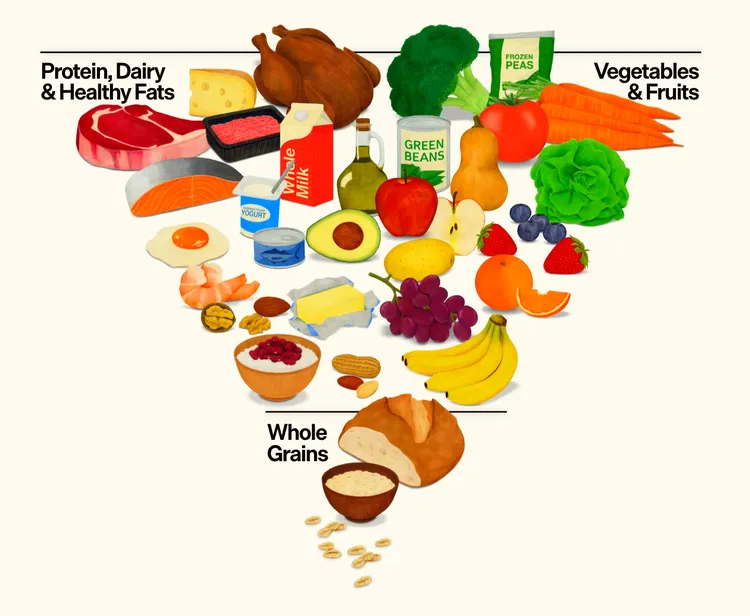
I wholeheartedly agree with the message to “eat real, whole unprocessed foods” yet I’m unsure that will be interpreted when looking at the upside down pyramid.
There has been great discussion on processed foods and ultra-processed foods and, unfortunately, these foods comprise the majority of many Americans diets. Yet, they’re not represented in this pyramid. I fear that it will be interpreted that whole grains are worse than processed/refined foods high in added sugars and/or chemical additives. While I don’t believe whole grains need to be at the top of the pyramid, they certainly should not be at the bottom of the pyramid. I would add processed foods high in added sugars, artificial sweeteners and chemical additives to the bottom of the pyramid. If it comes in a bag or a box, minimize it. Instead, choose healthy complex carbs – sweet potatoes, winter squash, and whole grains. Portions still matter.
I love that vegetables are at the top and favor including vegetables with 2 or even all of your meals daily. And while I encourage most to eat 1/2 cup fruit 2-3x daily, I recommend double, preferably triple the amount in vegetables. And the pyramid does place vegetables higher than fruit. If eager for another produce goal, aim to consume 10 different types of vegetables, fruits, herbs, and spices daily. These foods provide vitamins, minerals, dietary fiber, and health-promoting phytochemicals. Furthermore, vegetables, fruits, legumes, and whole foods support the gut microbiome, digestion, immunity, and metabolic health.
Red meat & Dairy at the Top?
I also agree that protein is indeed essential and that it should be included with each meal. Consuming 1.2 to 1.6 grams per kilogram desired body weight is appropriate, and stated in the new guidelines. Incorporating some plant protein, however, has been shown to be very healthful and reduce risk of various chronic diseases; that is not appropriately portrayed in this pyramid. Furthermore, conventional beef production is responsible for the majority of food related environmental concerns.
I’m not suggesting that one cannot eat some high quality, unprocessed red meat, but ground beef more favorable than salmon? Cheese is at the top and beans are near the bottom. Evidence based research states otherwise.
What about the role of dairy?
Dairy foods, particularly unsweetened yogurt and kefir, can be a good source of protein, vitamins, and minerals and also provide gut healthy probiotics. Do we really need 3 servings daily? I don’t think so. The reality is that many Americans simply don’t tolerate dairy, whether it be the lactose, casein, or whey. And, much of the dairy consumed in the United States is sweetened with sugar or artificial sweeteners. While the written guidelines state opting for unsweetened varieties, again, I fear that may not necessarily be the way the pyramid is interpreted.
Did $ and politics influence these guidelines?
There are certainly concerns of conflict of interest given that at least half of the experts who contributed to this pyramid have financial ties with the meat and dairy industry. Conflicts of interest are not new in this arena. The guidelines have historically been influenced by multinational food corporations with vested interests in promoting processed products.
What’s the story with fat?
Regarding fats, we need some fat daily in the diet to appropriately support hormones and nutrient absorption. The Mediterranean diet undoubtedly has been leading the charge in health and disease prevention - olive oil, avocados, nuts/seeds are healthy fats. I think the use of butter can be included at times, but I think the pyramid portrays butter more favorably than is stated in the guidelines.
New focus on gut health
The new guidelines specifically mention gut health and the microbiome, recommending fermented foods like sauerkraut, kimchi, kefir, and miso to support a diverse microbial ecosystem. It is noted that highly processed foods "can disrupt" the delicate balance of your gut bacteria. This is a great addition to the guidelines!
And the role of alcohol?
Even mild alcohol consumption can disrupt essential nutrient levels, impacting energy, mood, and overall health. It is well known that alcohol negatively impacts our liver, heart disease, certain cancers, gut microbiome, immune function, mental health, and more. While the guidelines state, “Consume less alcohol for better overall health”, alcohol is not represented with the pyramid and no guidance on amounts is provided.
The written Dietary Guidelines that allow for explanation are primarily sound and reasonable. The pyramid model makes it very confusing about frequency and portions of food. Ultimately, I think most Americans will only see the pyramid and never read any part of the nutrition guidelines, which may be quite confusing and misinterpreted.
Bottom Line
There are so many judgments, guilt, and emotions many of us face with food. In a sentence, focus on more protein, more plants, smarter carbs, healthy fats, better gut health — not restriction.
Use food to nourish yourself, focus on what you want to add to your diet (less on what you’re eliminating), fill that plate with vegetables, a little fruit, and do include protein with each meal, and that protein may be plant or animal based. Add in healthy fats like olive oil, avocados, nuts, and seeds. Empower yourself and your health with your food choices.
Hope 2026 is off to a good start for all of you!
In Health,
Natalie