
Ever wonder why a bowl of pasta hits differently the next day, cold, straight from the fridge? Turns out there's real science behind that leftover-rice-salad or overnight oats instinct. Let's talk about resistant starch — one of my favorite examples of how a small shift in how we prepare food can change how our body responds to it.
What exactly is resistant starch?
Most starchy foods — rice, pasta, potatoes, bread — get broken down by digestive enzymes in the small intestine and absorbed quickly as glucose, which is part of why they can send blood sugar climbing. Resistant starch is the exception. As the name suggests, it resists that early digestion and travels largely intact down to the large intestine, where our gut bacteria ferment it rather than our enzymes breaking it down.
That single difference in destination changes quite a bit:
It behaves more like fiber than sugar. Because resistant starch isn't rapidly absorbed as glucose, it doesn't spike blood sugar the way regular starch does.
It feeds your gut bacteria. When gut microbes ferment resistant starch, they produce short-chain fatty acids, including butyrate, which nourishes the cells lining your colon and supports a healthier gut environment.
It comes in several forms. Researchers classify resistant starch into a few types — some occurring naturally in foods like green bananas, beans, and whole grains, and others formed through cooking and cooling starchy foods (think potatoes, rice, or pasta that spend time in the fridge). That cooling process actually restructures the starch into a more resistant form, which is the science behind the 'cold pasta salad' phenomenon.
What does the research say?
Resistant starch has become a genuinely active area of nutrition research, and the findings so far are encouraging, particularly for blood sugar and metabolic health:
In adults with type 2 diabetes, research has shown that replacing a modest portion — roughly 15% — of dietary starch with resistant starch improved glycemic control without making meals less palatable.
Among people with excess body weight, resistant starch supplementation has been associated with improved glucose tolerance and insulin sensitivity, along with reductions in body weight, fat mass, and waist circumference.
Because resistant starch ferments into short-chain fatty acids like butyrate, propionate, and acetate, it's been studied for its role in supporting features of metabolic syndrome — elevated blood pressure, blood sugar, and cholesterol — though this remains an evolving area.
Some research suggests resistant starch may help lower LDL ('bad') cholesterol, but the evidence here is still preliminary, so I wouldn't lean on it as a primary cholesterol strategy just yet.
A balancing note: as with most nutrition research, results vary by the type of resistant starch used, the dose, and the population studied. Not every trial shows the same magnitude of benefit, and much of this work is still in earlier stages, especially for outcomes like cardiovascular risk. I think of resistant starch as a genuinely useful tool for blood sugar and gut health, not a cure-all.
Where to find it
You don't need a supplement to get more resistant starch into your day. Some of the most reliable dietary sources:
Cooked and cooled starches — potatoes, rice, pasta, and sweet potatoes that have been cooked, then refrigerated for several hours or overnight.
Sweet potatoes — like white potatoes, sweet potatoes develop more resistant starch once cooked and cooled. A batch of roasted sweet potato cubes chilled overnight makes an easy addition to salads and bowls.
Green (unripe) bananas and plantains — the greener the banana, the higher the resistant starch content. As it ripens, more of that starch converts to regular sugar.
Legumes — lentils, chickpeas, and beans are naturally rich in resistant starch alongside their fiber and protein.
Whole grains — oats, barley, and whole grain rice contribute resistant starch, especially when minimally processed.
Raw oats — think overnight oats, which also happen to be a convenient make-ahead breakfast.
Good news on reheating: you don't have to eat these foods cold to benefit. Once a starch has been cooked and cooled, the resistant starch that forms largely remains intact even after you reheat it — so a bowl of leftover rice, pasta, or sweet potato can be warmed back up without losing this benefit.
A few practical tips
Batch-cook and chill. Make a big pot of wild rice, rice, sweet potatoes, potatoes, or pasta, and let a portion cool in the fridge before eating — even a few hours makes a difference, and overnight is better.
Build a 'cold starch' habit. A cooled potato salad, a cold rice bowl, or a chilled pasta salad with vegetables and protein is an easy way to work this in without extra effort.
Choose greener bananas if you're aiming to add resistant starch specifically, and save the ripe, spotty ones for smoothies or baking.
Increase gradually. As with any fiber-like component, adding resistant starch too quickly can lead to temporary bloating or gas. Let your gut microbiome adjust over a few weeks.
Pair with protein and vegetables to round out the meal and support steady energy, rather than relying on resistant starch alone.
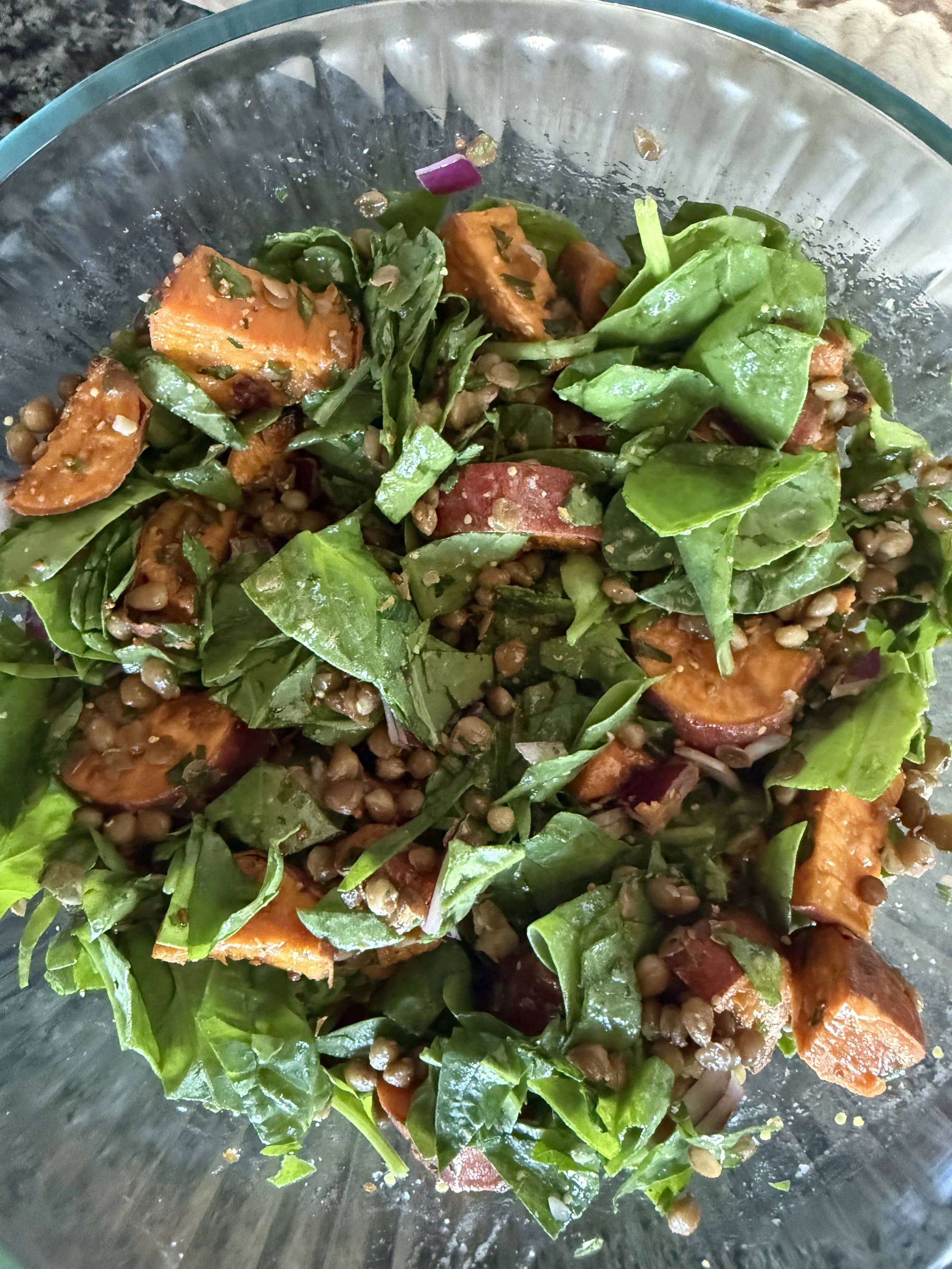
Lemony Lentil & Sweet Potato Salad
This one's a resistant-starch double feature — lentils and cooled roasted sweet potato in the same bowl. Make it ahead; it actually tastes better the next day, once everything's had time to chill.
Ingredients:
1 cup dried green or brown lentils, rinsed
2 medium sweet potatoes, peeled and cubed
1 tablespoon avocado or olive oil, for roasting
3 cups baby spinach or arugula
¼ cup red onion, finely chopped
¼ cup fresh parsley, chopped
¼ cup crumbled feta (optional)
For the lemon dressing:
3 tablespoons extra-virgin olive oil
Juice of 1 lemon
1 teaspoon Dijon mustard
1 small garlic clove, minced
Salt and pepper to taste
Directions:
Preheat oven to 400°F. Toss sweet potato cubes with oil and roast 20-25 minutes, until fork-tender.
Meanwhile, cook lentils according to package directions until just tender, about 20 minutes; drain.
Let both the sweet potatoes and lentils cool, then refrigerate for at least a few hours or overnight — this is what builds the resistant starch.
Whisk together the dressing ingredients.
Combine chilled lentils, sweet potatoes, spinach, red onion, and parsley in a large bowl. Toss with dressing and top with feta, if using.
Overnight Oats
Raw oats are naturally rich in resistant starch, and soaking them overnight keeps that intact while making them tender and easy to digest — no cooking required.
Ingredients:
1/3 cup old-fashioned rolled oats
½ cup milk of choice (dairy or plant-based)
¼ cup yogurt (dairy or plant-based)
2 tablespoons chia seeds
½ teaspoon vanilla extract
Pinch of cinnamon
Toppings: sliced banana, berries, nuts, or nut butter
Directions:
Combine oats, milk, yogurt, chia seeds, vanilla, and cinnamon in a jar or container. Stir well.
Cover and refrigerate overnight, or at least 4 hours.
In the morning, stir and add toppings of choice. Enjoy cold, straight from the fridge.
Chilled Wild Rice & Black Bean Salad
Another two-for-one: cooled wild rice and black beans both bring resistant starch to the table, plus fiber and plant protein. This one holds up well in the fridge for several days, making it an easy make-ahead lunch.
Ingredients:
1 cup wild rice (or a wild rice blend), cooked according to package directions and cooled
1 15-ounce can black beans, rinsed and drained
1 cup corn kernels, fresh, frozen and thawed, or canned
1 red bell pepper, diced
¼ cup red onion, finely chopped
¼ cup fresh cilantro, chopped
1 avocado, cubed (add just before serving)
For the lime dressing:
3 tablespoons extra-virgin olive oil
Juice of 1-2 limes
½ teaspoon ground cumin
Salt and pepper to taste
Directions:
Cook wild rice, then spread on a baking sheet and refrigerate for at least a few hours, or overnight, to cool completely — this is what builds the resistant starch.
In a large bowl, combine cooled rice, black beans, corn, bell pepper, red onion, and cilantro.
Whisk together the dressing ingredients and toss with the salad.
Top with avocado just before serving. Keeps well covered in the fridge for up to 4 days (add avocado fresh each time).
Hope you found something here worth adding to your routine — whether it's a daily cup of green tea or a handful of cherries. As always, if you'd like to dig deeper into either topic, reach out.
In Health,
Natalie