
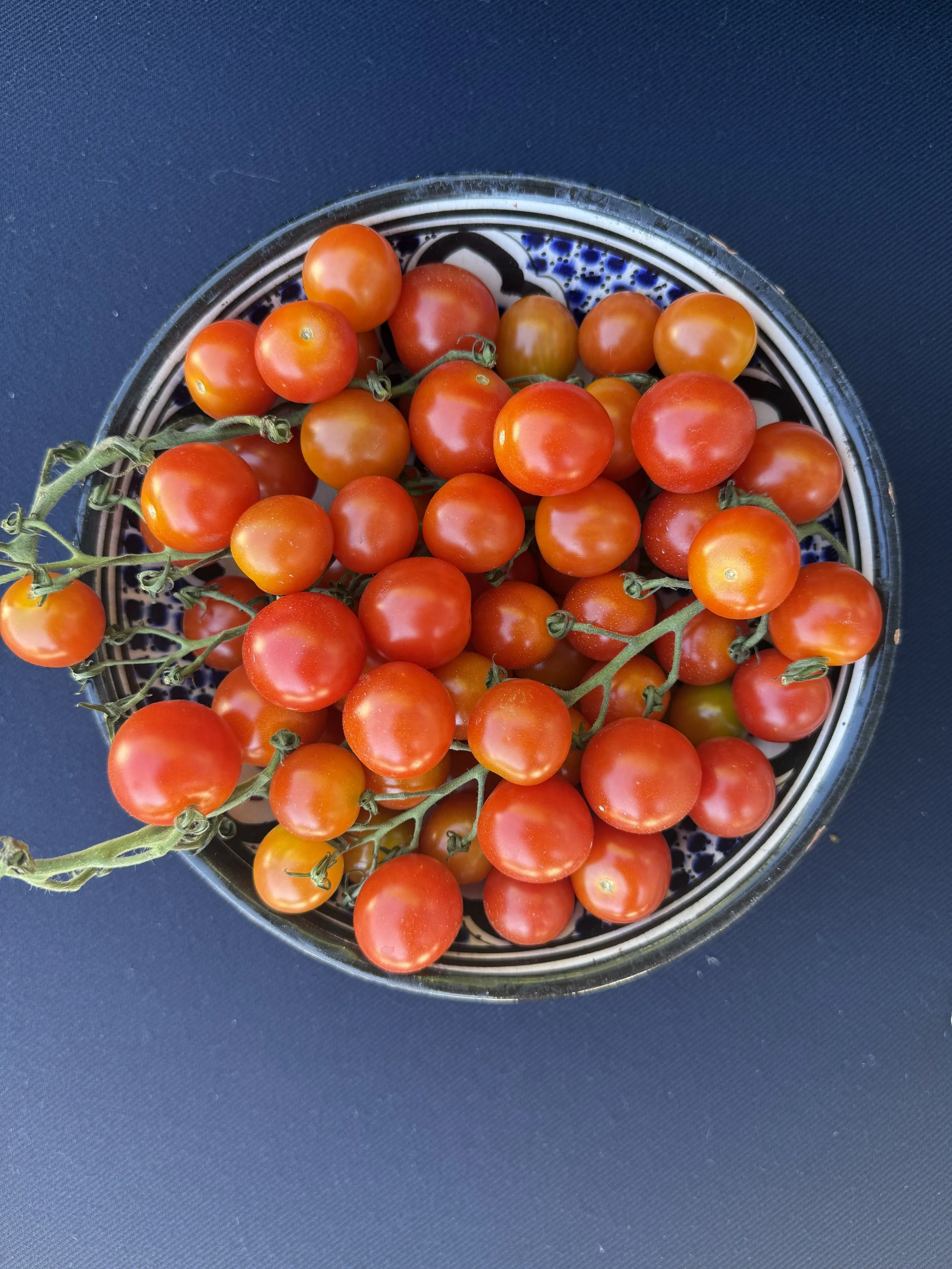
Have you ever wondered why something as ordinary as a tomato keeps showing up in nutrition research, decade after decade? Technically a fruit, though we treat it as a vegetable, the tomato brings fiber, vitamin C, potassium, and folate to the table. But its real claim to fame is lycopene — the phytochemical behind its bright red color, and the compound most of tomatoes' health benefits trace back to. A handful of newer studies have refined what we actually know about lycopene, and the picture is more interesting, and more specific, than “eat more tomatoes.”
Blood Pressure: Tomatoes' Best-Supported Benefit
A recent review pooling several high-quality studies on tomato-derived lycopene — from raw tomatoes, juice, sauce, and extract, not isolated supplement capsules — found a real, measurable effect on blood pressure. The drop was modest — roughly 2.4 points off systolic and 1.3 off diastolic — but it showed up consistently across studies, which is what gives researchers confidence in it. The effective range was about 5 to 30 mg of lycopene daily, or roughly two to ten (yes, 10!) raw tomatoes.
The likely explanation is that lycopene helps blood vessels relax and function more efficiently, partly through its antioxidant activity. This effect was more noticeable in people with elevated blood pressure or metabolic concerns than in those who were already healthy and normotensive — which makes sense, since there's simply more room for improvement. Of the various tomato-and-heart claims out there, this is currently the one with the strongest evidence behind it.
Cancer: A More Nuanced Picture
A large 2025 analysis pooling data from over 120 studies and more than four million participants offers a more layered story than “tomatoes fight cancer.” Eating tomatoes as a whole food wasn't significantly linked to lower overall cancer risk — but higher dietary lycopene intake and higher lycopene levels in the blood were, associated with a 5% and 11% lower risk, respectively, compared to those with the lowest intake or levels. A clear, dose-related link also emerged specifically for prostate cancer risk.
A Closer Look at Prostate & Lung Cancer
Prostate cancer is where lycopene's case has the longest track record. The 2025 analysis found a linear inverse relationship — as dietary lycopene intake went up, prostate cancer risk nudged down — though the effect size itself was modest. That tracks with an earlier review of 66 population studies, which found men with the highest lycopene intake had an 11% lower risk of prostate cancer compared to those with the lowest, and men with the highest circulating blood lycopene had a 17% lower risk.
The evidence hasn't always agreed, though. One large prospective study following close to 30,000 men found no overall link between lycopene intake and prostate cancer risk, though it did note a possible protective pattern among men with a family history of the disease. Taken together, prostate cancer is the strongest and most consistent of the cancer-related lycopene findings — but “strongest” here still means modest and worth watching, not a guarantee.
For lung cancer, however, the relationship wasn't a straight line. Risk dropped as lycopene intake increased up to about 5 mg a day, but then began climbing again above roughly 10 mg a day of intake. In other words, more wasn't better past a certain point — a genuine caution against chasing high-dose lycopene supplements rather than getting it from food. No meaningful link was found for breast, ovarian, bladder, colorectal, stomach, or pancreatic cancer in this dataset.
It's worth remembering this is observational data — it shows patterns, not proof of cause and effect, and people who eat more lycopene-rich foods also tend to eat more fruits and vegetables overall. Still, it reinforces a familiar theme: food-based sources, in reasonable amounts, are where the benefit lives.
Skin: A Modest Layer of Support
Lycopene has also been studied for its role in skin health, with research suggesting it may help calm the inflammation and pigment changes that come from sun exposure over time. In studies using food-equivalent doses — about 8 to 20 mg of lycopene daily over 10 to 12 weeks — it modestly reduced skin redness after UV exposure. This is a nice addition to your routine, not a substitute for sunscreen or sun-safe habits.
Gut Microbiome: Early, but Worth Watching
The least mature area of tomato research is its effect on the gut microbiome. So far, the supportive evidence comes mostly from animal studies — tomato powder increasing beneficial gut bacteria diversity in piglets, and lycopene easing gut imbalance in mouse models of atherosclerosis. A completed human trial out of the University of Barcelona is looking at tomato paste and the gut-brain connection, though results haven't been published yet. This one's still in progress — promising, but not yet proven in people.
Fatty Liver: Developing Research
While the preclinical mechanistic picture of tomatoes and fatty liver is genuinely well-developed, more research is needed. Fatty liver, now technically referred to as MASLD (metabolic dysfunction-associated steatotic liver disease), is associated with obesity, high blood sugar, and high cholesterol rather than alcohol consumption. The NUTRIHEP study, published in 2024, reported a protective role for lycopene against liver disease, with the best-performing concentration at 9.5 mg/day, corresponding to a relative risk reduction of approximately 40% — but that was an observational design, not an interventional trial. Fast forward to today – the POMOSANO trial, a randomized controlled trial, found that adults with MASLD following a daily tomato-rich diet (200g raw tomatoes + 50g tomato sauce) for 6 weeks showed a significantly greater reduction in liver fat than the control group, with no major weight loss accounting for the difference. The researchers attribute the benefit in part to lycopene's antioxidant activity.
Getting the Most From Your Tomatoes
Go for red: the redder the tomato, the higher its lycopene content.
Add olive oil: lycopene is fat-soluble, so a drizzle of olive oil in your tomato sauce or salad helps your body absorb more of it.
Stay local and in season: locally grown, vine-ripened tomatoes tend to taste better than commercially ripened ones — and the ones you enjoy are the ones you'll actually keep eating.
Bottom Line
The strongest, best-supported case for tomatoes right now is their modest but real effect on blood pressure. The cancer story is more nuanced than a blanket recommendation — it's really about lycopene intake and levels rather than tomatoes alone, and more is not automatically better. The skin benefit is real but modest, and the gut microbiome and fatty liver research is still finding its footing. Across the board, the theme holds: a tomato or two most days, cooked into a sauce with a little olive oil, is a simple, low-risk way to support your health — no need to chase supplements or mega-doses to get there.
Hope you found a reason to reach for a tomato or two this week — sauce, salad, or straight off the vine. As always, reach out if you'd like to talk through how this fits your own health goals. Note one potential caveat with tomatoes is for nightshade family sensitive folks - tomatoes are part of that family.
In Health,
Natalie