
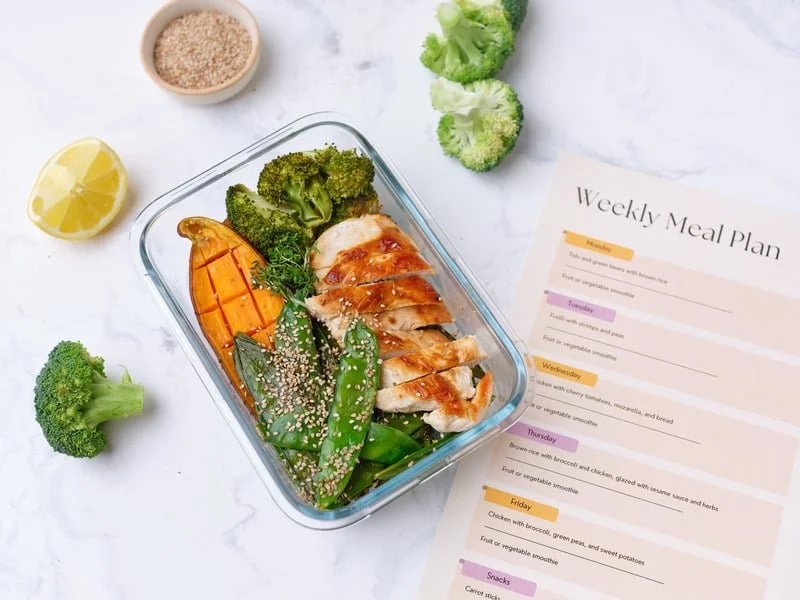
For many, the term “meal planning” feels aspirational, and maybe even daunting, calling to mind images of Pinterest-worthy, color-coded grocery lists, or hours spent cooking and labeling massive batches of meats and veggies to feed a person or family for the entire week. Perhaps you have tried meal planning, with varying degrees of success, or maybe it is something you would like to try, but don’t know where to start. While there are myriad approaches and no right or wrong way to meal plan, there is one thing we know to be true: meal planning should make your life easier, not more complicated. Meal planning offers a few key benefits, which may help level up your weekly routine:
Benefits of meal planning include:
Nutrition Meets Taste: Meal planning enables you to prepare wholesome, tasty meals that meet your nutritional needs AND appeal to your palate and energy level.
Planning = Less Stress: Meal planning means you’ll have ingredients on hand to make meals when you need them, and a plan to use them. Having a plan leads to peace of mind.
Less Food & $$ Waste: Purchasing food ahead and determining quantities needed, you will avoid last-minute store trips, random purchases, and filling up your compost bin with unused food.
Strength in Consistency: Once meal planning becomes routine, this consistency will be one of your superpowers. You’ll feel confident building meals that nourish and satisfy, so you can spend your energy on other things!
Considerations before starting, and Intro to the Building Blocks Method
Before jumping into our “how to” for meal planning, take a moment to evaluate your unique situation. Meal planning will vary, based on your personal:
Household Size
Budget
Food Preferences
Dietary Restrictions or Allergies
Interest In and/ or Energy for Cooking
Cooking Skills
Time Availability
Don’t worry, the meal planning method we will suggest can be tailored based on all of the personal considerations above. It is just helpful to know these things in advance so that you can address them as you meal plan.
So, what is the method we recommend? We call it “the Building Blocks method.” This is a straightforward way to build healthful, filling, and flavorful weekly meals without a huge time commitment, financial investment, or complex recipes. This approach supports you through cooking simple, nutritious meal components that can be paired in unique ways to produce tasty whole meals. There are three key steps to follow: 1. The Brainstorm Step, 2. Grocery List Building, and 3. Meal Building. Let’s break each step down in detail.
1. Brainstorming Foods & Flavors
To begin, you will want to write down a list of:
5+ proteins you like
3+ whole grains or starches you like
5+ veggies that you enjoy cooked
5+ veggies that you enjoy raw
5+ flavor components you enjoy: sauces, herbs, spices, fermented veggies, etc.
Examples for the brainstorm list might look like:
Protein: Chicken, beef, salmon, eggs, tempeh, lentils, greek yogurt
Grains: Brown rice, millet, quinoa
Cooked veggies: broccoli, spinach, asparagus, sweet potatoes, zucchini, brussels sprouts, cabbage, green beans
Raw veggies: cherry tomatoes, microgreens, arugula, cucumber, mini bell peppers, celery, avocado
Flavor components:
Sauces: tomato sauce, barbeque sauce, pesto sauce, hummus
Oils/ butters: olive oil, coconut oil, ghee, sesame, tahini paste, nut butters
Acids: vinegar (apple cider, balsamic, red wine, rice etc), lemon or lime squeeze, hot sauce, mustard, coconut aminos
Herbs: cilantro, dill, basil, rosemary, thyme, ginger, garlic
Fermented foods: kimchi, sauerkraut, miso
Other: olives, Cheeses (goat cheese, parmesan, feta, etc); coconut milk
Below is a brainstorm worksheet to help you with this step, which includes many more food ideas in each category.
Next, you will think about flavor profiles or meal themes that appeal to you, and how you build those flavor wise. Some of you may have lots of ideas here, and others may feel intimidated, but look up at your flavor components above for inspiration. Here are several ideas to get you started:
Italian: marinara or pesto, garlic, fresh basil, pine nuts, olives, olive oil drizzle, fresh lemon
Greek: dill, oregano, lemon, olives, olive oil, yogurt sauce, feta cheese
Barbeque: barbeque sauce, dijon or yellow mustard, sauerkraut, garlic
Mexican/ southwest: smokey spices (cumin, chili, paprika, garlic, or taco seasoning blend), cilantro, jalapeno, hot sauce, lime
Asian: coconut aminos, miso, sesame oil, ginger, rice vinegar, garlic, sriracha, chili sauce
Classic breakfast flavors: cinnamon, vanilla, salt and pepper, garlic/ onion, ghee/ butter
Umami flavor combo: tahini, lemon, garlic, optional miso paste – always delicious!
2. Grocery List Building
Now that you have compiled your favorite ingredients and flavors, you will use these insights to build your grocery list for the week. This time, be specific about what exactly appeals to this week within each category, in the following format (with examples provided):
Choose 2-3 proteins: Chicken breasts, grass-fed ground beef, tempeh
Choose 3-4 veggies from the “cooked” category: sweet potatoes, broccoli, asparagus, bok choy
Choose 4+ veggies from the “raw” category: arugula, radishes, cherry tomatoes, cucumber, avocado
Choose 1 whole grain - wild rice
Leave space on your list for the flavor components – leave this BLANK at first
Now, you are going to select 3 different flavor profiles/ themes that appeal to you this week, and let that guide which flavor components you add to your shopping list.
For instance, for my themes, I chose Greek, Asian, and the Umami flavor combo. I will add in flavor components to create these now:
Dill
Cilantro
Green olives
Lemons
Olive oil (pantry staple)
Coconut aminos (pantry staple)
Sesame oil (pantry staple)
Tahini (pantry staple)
You can use the template below to guide this process:
3. Meal Building
With your grocery list compiled, it is time to put together three dinners using your flavor profiles. Revisiting our example selections above, it is relatively simple to build three dinners:
Greek chicken breast & asparagus with green olives, lemon, garlic, and dill, served with wild rice and an arugula, and (optional) radish and tomato side salad.
Sesame sauteed ground beef, with roasted sweet potatoes and bok choy, seasoned with sesame oil, coconut aminos, sriracha, and cilantro, and topped with avocado.
Tempeh bowl: Roasted tempeh, broccoli, and sweet potato, garnished with cilantro and chopped arugula and cucumber, and drizzled with tahini-lemon-miso sauce.
A few additional tips that may come in handy in the meal building phase:
Make extra: Cook at least double what you need for each meal. The leftovers can serve as dinner the next night or alternatively, as lunch for you or your family members.
Don’t overthink the “cooking” here: Remember, the only things being cooked are the proteins, cooked veggies and starches, and possibly stirring together ingredients for a sauce or dressing. The rest of the preparation is washing and chopping veggies.
In many cases, the “cooking” of the proteins and veggies can be simple roasting. The general formula here is 400 degrees, on a sheet pan, with a piece of parchment paper, for a designated length of time (most veggies will take 20-30 min, but google individual cook times for both veggies and proteins to be sure).
If you can’t cook, you can still assemble: for those weeks where energy is low, or when you simply do not want to cook, choose no-cook proteins and very easy veggie cooking methods, and simply focus on assembly. Examples of this might include:
Using rotisserie chicken, smoked or canned salmon, or hard boiled eggs as your protein source.
Microwave a sweet potato for 5 mins in the microwave (wrap in paper towel, poke holes in it beforehand, and flip over halfway). Consider frozen rice as a nearly instant starch (best practice is to put it in a bowl with damp paper towel over it for microwaving, rather than microwave in plastic wrapping).
Steam broccoli for 5 mins, add a squeeze of lemon and sea salt - voila!
Make a hearty salad, using this simple formula: prepped protein + ½ cup beans or half a sweet potato + favorite greens + 2 other veggies + 1-2 fats/ flavors (olive oil & vinegar, mustard, sauerkraut, nuts, olives)
What about breakfast?
While you can use the building blocks method as a template for any meal, breakfast can be simplified even further. Many people tend to favor either savory or sweet breakfasts, but it is easy to get stuck in a rut, eating the same yogurt fruit bowl or egg scramble day after day. With this in mind, we compiled a list of both sweet and savory breakfast options that offer lasting satiety and diverse micronutrients. Try and find a couple new ones that sound appealing and add the ingredients on to your grocery list:
SWEET
chia pudding (chia + yogurt + protein + almond milk) + berries, topped with coconut or pumpkin seeds
oats + berries + protein + peanut butter
yogurt + seasonal fruit + flax/ hemp + walnuts + cinnamon
smoothie - protein + flax/chia/hemp + large handful frozen fruit + handful frozen cauliflower or spinach + spoonful nuts or nut butter + cinnamon
protein pancake - 2 eggs + ½ banana + spoonful flax, blended together, cooked on low, topped with berries + cinnamon + hemp hearts
SAVORY
2 poached eggs + avocado + toast of choice + microgreens
omelette with 2-3 eggs, sauteed mushrooms, leeks, peppers, & side of steamed greens with lemon
lox + avocado + flax toast + cherry tomatoes
quinoa bowl w/ eggs, avocado, shaved raw veggies + olive oil drizzle
breakfast tacos - eggs + black beans + peppers + salsa in whole grain corn tortilla
dinner leftovers - protein + starch + veggies from the night before!
Takeaways
We’ve shared a simple template to help put together nutrient-dense, filling, and diverse meals to get you through the week. While we have offered some structure, meal building should be flexible and able to meet the needs of your life circumstances. With some practice, you will be able to adapt this basic framework for busy days, family or group dinners, and no-cook meals. Ultimately, our goal is to help you save time, energy, and resources so you can spend more hours doing what you love.
Use this simple, flexible meal planning framework to build nutrient-dense meals that suit your lifestyle. We hope this is helpful for you!
In Health,
Blair & Natalie
Blair Strickland, MBA, dietetic intern
Natalie Ledesma, MS, RDN, CSO, CLT